
Boarding a Dog After Surgery: When It's Safe, What to Ask, and How to Plan the Stay
By The Blue Sock10 min read
- 1.Should You Board a Dog After Surgery, or Wait?
- 2.What a Recovering Dog Needs From a Sitter's Home
- 3.The Incision Check: What's Normal and When to Call the Vet
- 4.Boarding a Dog After Surgery on a Longer Trip
- 5.How to Compare Sitters for a Recovering Dog on The Blue Sock
- 6.Frequently Asked Questions
- 7.Find the Home That Fits the Recovery
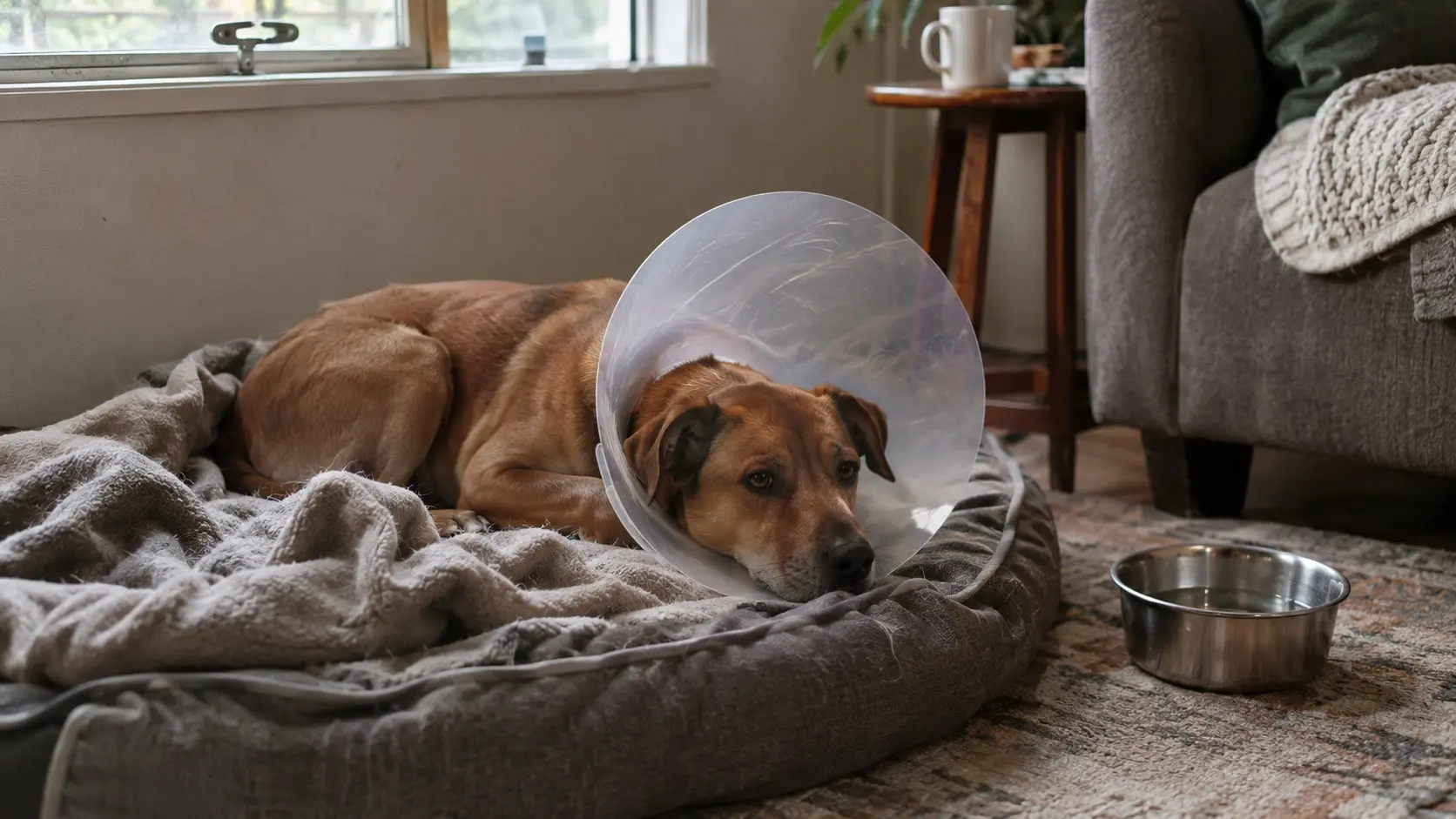
The surgery is booked, and so is the trip. Sometimes that's poor timing, and sometimes it can't be helped: a knee repair that couldn't wait, a lump that had to come off, a spay that finally reached the top of the vet's schedule. Either way, boarding a dog after surgery is a different decision from an ordinary stay. The question isn't only who is available. It's whose home and routine can keep a healing dog quiet, leashed, and away from their stitches for as long as the vet says.
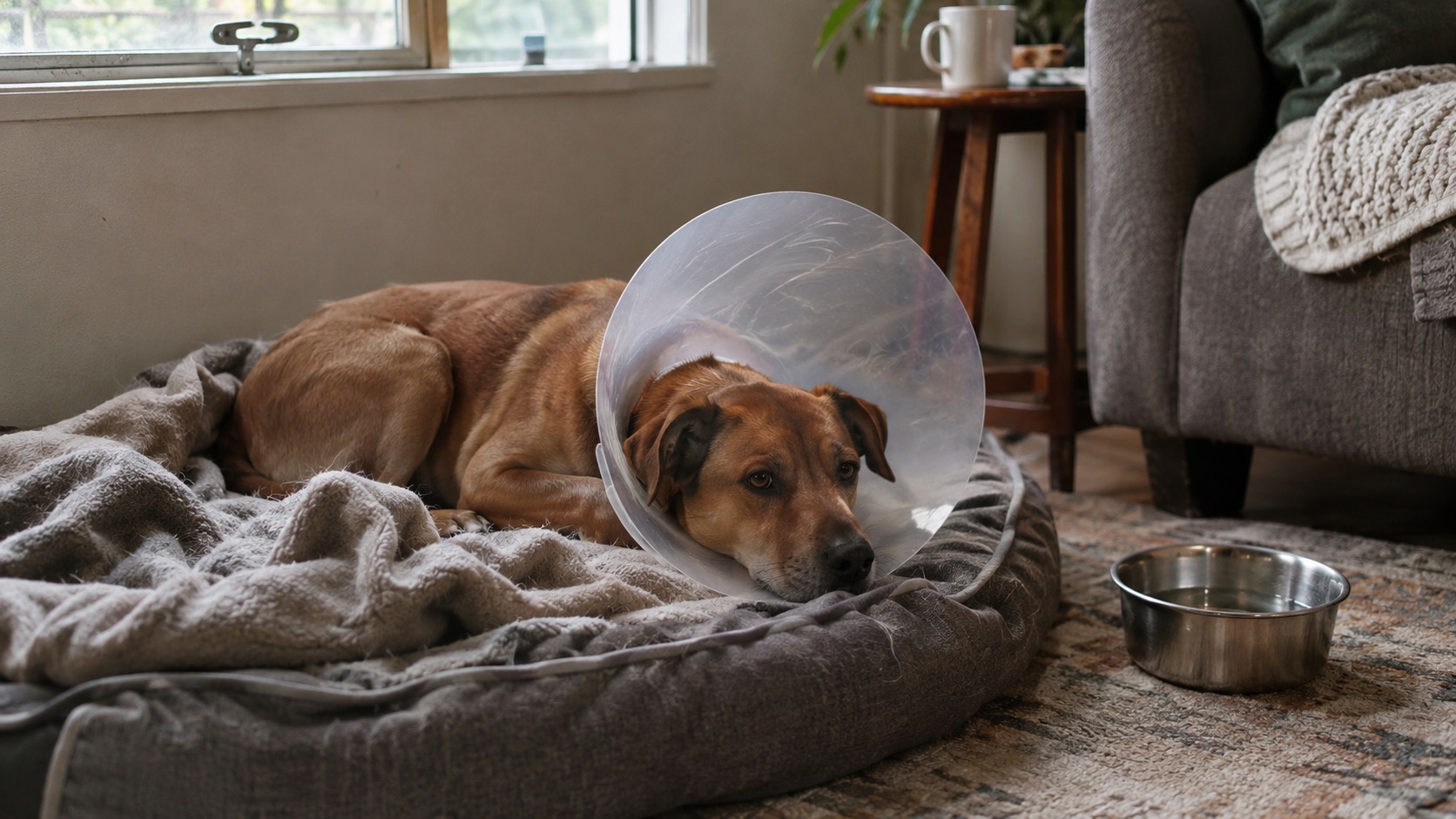
Below: the recovery timelines vets publish, what a sitter's home needs, the incision signs that mean call the vet, and how to plan around a recheck that lands mid-trip.
Should You Board a Dog After Surgery, or Wait?
Start with the discharge sheet, not the calendar. Recovery length depends on the procedure, but the published guidance agrees that the restriction lasts for the whole recovery, not just the first few days.
| Procedure | What vets publish | What it means for a stay |
|---|---|---|
| Routine soft-tissue surgery (spay, neuter, a lump removal) | VCA Animal Hospitals says to restrict activity "for the time recommended by your veterinarian (often 7–14 days)." Non-dissolving stitches or staples are "usually removed 10–14 days after surgery" (VCA). | A trip in the first two weeks overlaps the whole restriction, and possibly the recheck. |
| Orthopedic surgery (a cruciate repair such as TPLO) | The American College of Veterinary Surgeons says activity "must be restricted for several weeks after surgery," with rehabilitation that includes controlled leash walks. | Any trip in the next couple of months is a recovery stay. Plan it as one. |
Three practical answers follow:
- If the surgery is elective, move it rather than the trip. Schedule it so the stitch-removal visit happens before you leave, or after you're back. Our Orange County vet cost guide lists published spay and neuter prices if you're comparing clinics.
- Be home for the first days if you can. VCA notes a fresh incision can look slightly redder for the first few days and seep a little blood in the first 24 hours. You should know what "normal" looks like before you hand your dog over.
- If the timing can't move, ask your vet: "Is a sitter's home fine for this recovery, and what would change your answer?" Their reply belongs in the sitter's instructions.
What a Recovering Dog Needs From a Sitter's Home
VCA calls strict confinement "necessary during the entire recovery period" and warns that licking can lead to chewed-out stitches "in a few seconds." Those two lines decide most of what you compare.
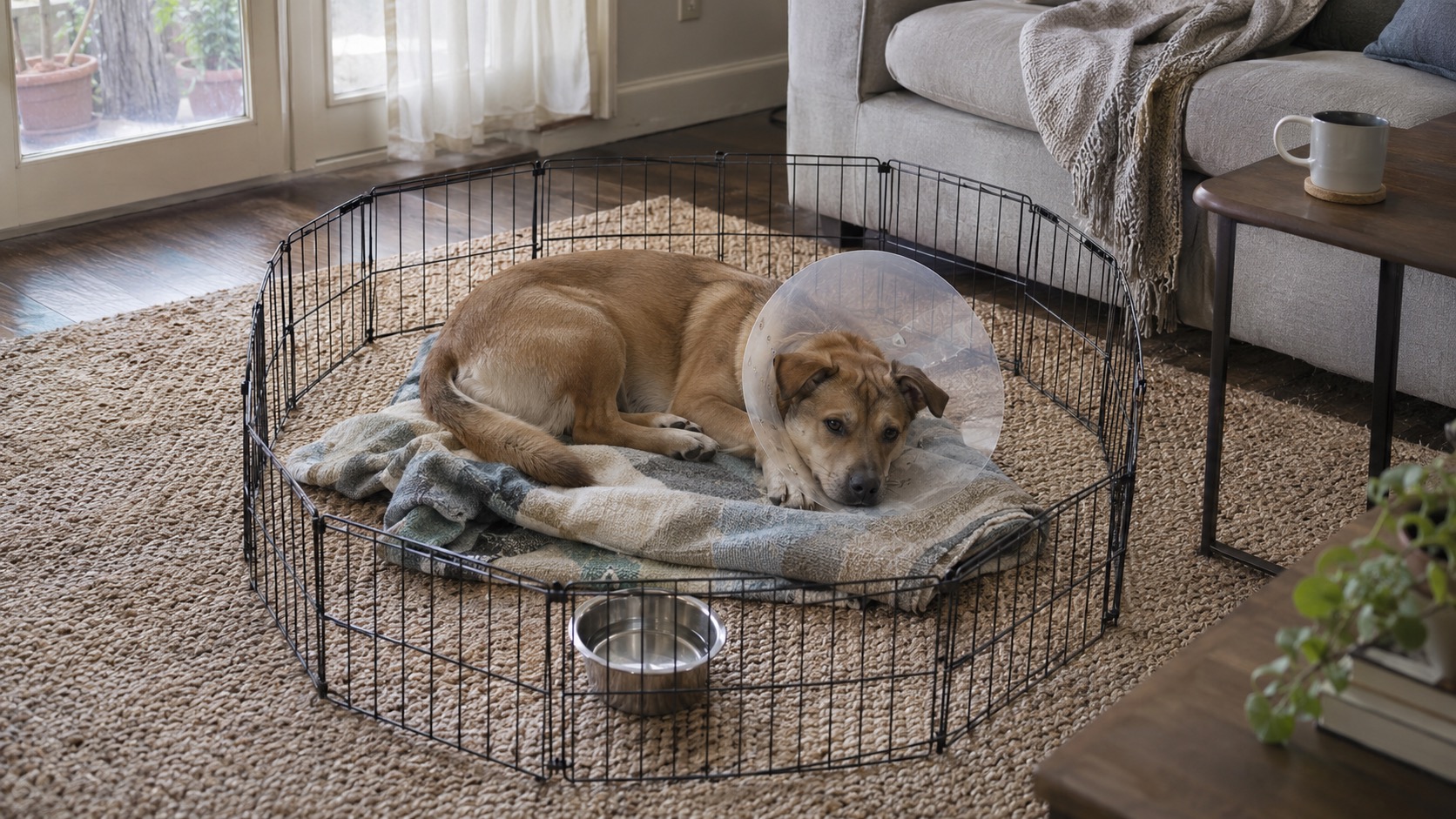
- A small, quiet space. One room, an exercise pen, or a crate, whichever your vet prescribed. An open floor plan with a dog door to the yard works against strict rest.
- No dog play. Even a gentle resident dog invites the running and jumping a recovering dog shouldn't do. If other dogs live in the home or are staying at the same time, ask how your dog would be kept apart.
- Leash-only bathroom breaks, even in a fenced yard. A dog let off leash can sprint at a squirrel. Put "leash, even in the yard" in writing.
- A plan for furniture and stairs. If the vet said no jumping, a dog who sleeps on the couch at home needs a different arrangement. Ask how many steps lead to the yard or the bedroom.
- Someone around to watch the cone. VCA says a cone, or a recovery garment depending on where the incision is, may be needed to stop licking. The risk is the hour alone when your dog works out how to reach the stitches anyway.
Crate rest vs. a crate-free home catches people out. If your vet prescribed crate rest, a sitter who normally runs a crate-free home may still be a good fit, but only if you agree on it in advance. Our crate-free vs. crate-trained guide covers how to hand over a crate routine.
The Incision Check: What's Normal and When to Call the Vet
VCA's advice is to look at the incision every day for "redness, swelling, discharge, or licking." Turn that into a written plan the sitter can follow without sending you a photo and waiting for a reply:
| What the sitter sees | What happens |
|---|---|
| Edges touching, slight redness in the first few days | Normal; mention it in the day's update |
| Licking or chewing at the site, or the cone came off | Cone back on, message you the same day |
| Swelling, a lot of redness, a bad smell, or any discharge | Message you and call the treating vet that day |
| Continuous dripping, seepage still going after 24 hours, stitches pulled out, or edges gaping | Call you and the vet now; don't wait for a reply |
Each row comes from VCA's incision-care page and its discharge instructions, which add that for routine elective surgery "any discharge from the incision site is abnormal." VCA also says to keep the incision dry: no baths and no sprinkler play until the vet clears it.
Most surgical patients go home with pain medication and often antibiotics. Give them exactly as prescribed and finish the course; don't adjust a dose to make the stay simpler. Our guide to boarding a dog on medication covers dosing sheets and handoff.
If something goes wrong while you're unreachable, the platform's Terms of Service let the sitter take your dog to the nearest available clinic after trying to reach you, and the vet bill is yours, not the platform's or the sitter's. What happens if your dog gets sick while boarding explains how that works at 2 a.m.
Boarding a Dog After Surgery on a Longer Trip
On a weekend, you can usually work around a recovery. On a two-week trip, the recovery and the stay are the same thing. Settle these before drop-off:
- The stitch-removal visit. If the 10–14 day window lands mid-stay, ask the clinic whether the visit can move and whether someone other than you can bring the dog in. Then ask the sitter whether they can drive. Don't assume; write down who is responsible.
- Medication supply. Pick up the full course before you leave, in the pharmacy bottles, with a written schedule. Refills are hard to sort out from an airport.
- One sheet of phone numbers. Your regular vet, the surgeon if different, and the 24-hour hospital closest to the sitter's home. OC Animal Allies keeps a directory of Orange County emergency hospitals.
- What a date change costs. Surgery dates slip, and so do trips. Each sitter chooses a full-refund window of 1, 3 or 7 days from the platform's published cancellation options; after it, you get 50% back until 11:59 p.m. the night before and nothing on the start date. Coming back late is billed as extended care under the sitter's own terms and can be charged to the card on file automatically.
The long-term boarding guide covers the rest of the two-week questions, including what happens if a sitter can't finish the stay.
How to Compare Sitters for a Recovering Dog on The Blue Sock
Plenty of sitters can take a healthy dog for a weekend. When you're boarding a dog after surgery, what matters is whose home and experience fit a recovery. Blue Sock sitter profiles let you compare that directly:
- Key Skills include Post-Surgery Care Experience, Injury / Wound Care Experience, Oral Medication Administration, and professional backgrounds such as Veterinary Technician / Technologist and Veterinary Assistant. Sitters choose what they list, so treat it as the start of the conversation.
- Home Environment shows tags such as No Resident Pets, Solo Stay Available and Other Dogs May Be Present, plus home type and size.
- Care Style shows each sitter's crating practice and the longest a dog may be left alone, from Never Left Alone upward, alongside tags like Low-Stimulation Care.
- Best Fit labels on sitter cards include Special Needs Dogs and Exclusive Boarding (One Household at a Time).
Booking is request-based: you describe the surgery and the restrictions, and the sitter decides whether it's a good fit before confirming. Put the vet's instructions in your dog's pet profile medical notes so they arrive with the request, then use the meet & greet to see the actual space: where the pen goes, which door the leash walks use, where the stairs are.
The Blue Sock is a curated platform. Sitters apply to join, are expected to meet minimum experience requirements, and complete a professional third-party background check before joining. Recovery stays aren't for all of them, and the ones who list the relevant skills are the ones to ask first. For older dogs, see what to look for in senior dog boarding.
Frequently Asked Questions
How soon after a spay or neuter can I board my dog?
Ask the surgeon; it depends on the incision and your dog. VCA puts typical activity restriction at 7–14 days and removal of non-dissolving stitches at 10–14 days. For elective surgery, the simplest plan is to finish the recheck before the trip.
Should my dog wear the cone for the whole stay?
For as long as the vet prescribed it. Ask whether a recovery garment is an option. VCA warns that licking can lead to chewed-out stitches within seconds, so the cone shouldn't come off for comfort unless your vet allowed it.
What if my dog's stitches are due out while I'm away?
Call the clinic before you book: can the date move, and can someone else bring your dog in? Then confirm in writing whether the sitter can make the drive. Absorbable sutures buried under the skin don't need removal, so check which kind your dog has.
Can a dog on crate rest stay with a crate-free sitter?
Sometimes. Crate rest is a medical instruction, so the sitter has to agree to follow it. Bring your dog's own crate, write down the schedule, and confirm it at the meet & greet. If the sitter isn't comfortable with it, compare sitters whose crating practice already includes crate time.
Find the Home That Fits the Recovery
The right sitter for a recovering dog isn't the one with the biggest yard or the most dog friends. It's the one who will keep your dog leashed, quiet, and in the cone for the full stretch your vet prescribed. Bring the discharge sheet when you browse sitters near you, and choose the home that can follow it.
You Might Also Like
 9 min
Nov 17, 2026
Emergency Dog Boarding: What to Do When You Need a Sitter on Short Notice
Need emergency dog boarding? What to pack in 15 minutes, the vaccine you can't rush, what to ask a sitter fast, and how refunds work when plans change again.
Read More → 9 min
Nov 10, 2026
Who Will Care for Your Dog If You're Hospitalized? A Backup Plan to Set Up Before You Need It
Planning dog care if you're hospitalized: who should hold your keys, how to tell responders a dog is home alone, which pet insurance policies pay for boarding during your hospital stay, and what happens if a pickup date slips.
Read More → 9 min
Oct 16, 2026
What Happens If Your Dog Gets Sick While Boarding? Who Decides, Who Pays, and What Insurance Covers
If your dog gets sick while boarding, who takes them to the vet, who pays the bill, and does pet insurance help? The thresholds, the emergency-care rules, and the paperwork to set up before you leave.
Read More →