
Who Will Care for Your Dog If You're Hospitalized? A Backup Plan to Set Up Before You Need It
By The Blue Sock9 min read
- 1.The First Problem: Nobody Knows Your Dog Is Home Alone
- 2.Three Ways to Arrange Care While You're in the Hospital
- 3.Planned Surgery vs. an Emergency Admission
- 4.Does Pet Insurance Cover Boarding If You're Hospitalized?
- 5.Setting Up Your Backup on The Blue Sock
- 6.Frequently Asked Questions
- 7.Choose Your Backup Before You Need One
Most pet parents plan dog care around trips. Very few plan it around an ambulance. A planned knee replacement gives you weeks to arrange things, but a fall, a sudden admission, or a surgery that turns into three nights instead of one can leave your dog home alone with nobody who knows. Planning dog care if you're hospitalized takes about an hour, and it's easier to do while you're well.
Below: who needs to know your dog is home, the realistic care options, what pet insurance pays for, and how to keep a slipping discharge date from becoming a second emergency.
The First Problem: Nobody Knows Your Dog Is Home Alone
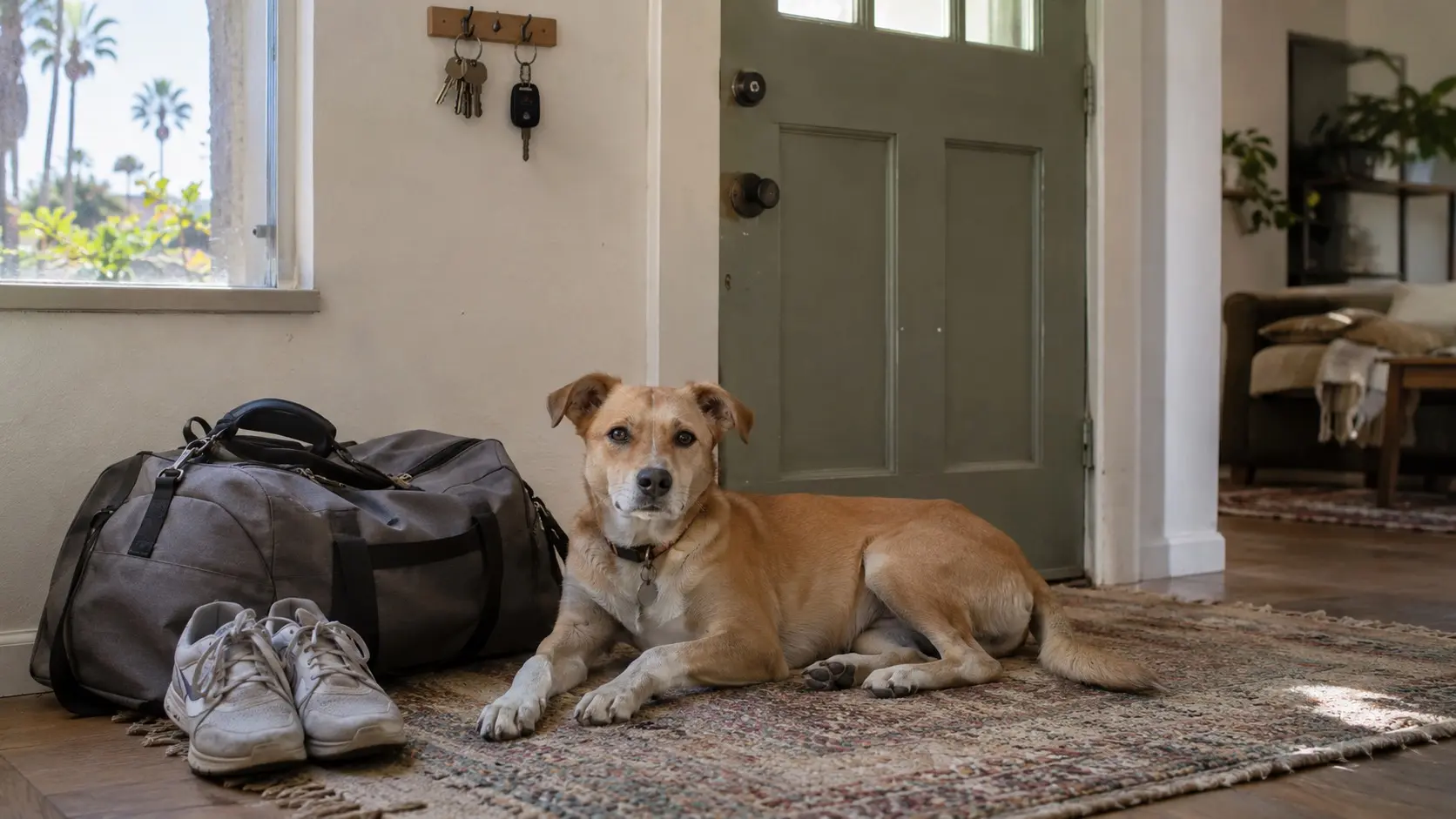
Paramedics ask about your medications; they rarely ask about your dog. So the first job of any plan is making sure someone finds out within hours, not days.
Your deadline is your own dog's limit. Decide how many hours your dog can safely be alone, counting water, potty breaks, and medication timing. A dog on twice-daily insulin has a much shorter deadline than a healthy adult who sleeps all afternoon. Then set up three things so someone arrives before that deadline:
- One key holder who lives nearby. The ASPCA's disaster preparedness guidance recommends choosing a temporary caregiver who "lives close to your residence" and giving that person a set of keys.
- A way for responders to reach that person. On an iPhone, Medical ID is readable from the Lock Screen without your passcode, and each emergency contact can carry a relationship label. Add your key holder and label them "dog's caregiver." A card in your wallet with the same name and number covers the moments your phone is dead or lost.
- A sign on the house. The ASPCA suggests a rescue alert sticker on a door or window that lists the number and types of pets inside, plus your vet's name and phone number.
A name on a card helps only if that person has agreed to come over on a Tuesday night with an hour's notice.
Three Ways to Arrange Care While You're in the Hospital
Once someone knows, your dog needs somewhere to stay. The best option depends on your dog and how long you'll be gone.
Family, friends, or neighbors. Fastest, and your dog already knows the person. It works for a night or two and gets harder after that. Helpers have jobs, and a dog with medication, reactivity, or separation anxiety can be a lot to hand someone at short notice.
A boarding facility. Facilities typically have set drop-off hours, intake paperwork, and vaccination requirements. Some ask for a temperament or behavior check before a first stay. Short-notice space and holiday availability vary by facility, so ask. Keep digital copies of your dog's rabies, DHPP, and Bordetella records on your phone. Our vaccine requirements guide explains what Orange County facilities and sitters usually ask for.
An in-home sitter. Your dog stays in a sitter's home with a routine closer to their own. Independent sitters set their own availability and capacity, so a same-week request depends on who has room. That makes a sitter you've already met more valuable than a perfect stranger you find from a hospital bed.
Planned Surgery vs. an Emergency Admission
If the admission is planned, treat it like a trip with an uncertain end date. Discharge dates move, and recovery often limits lifting, driving, or stairs, so a 60-pound dog pulling on a leash becomes a real problem. Ask your surgeon how long those limits last, and plan your dog's care for the whole recovery, not just the hospital nights.
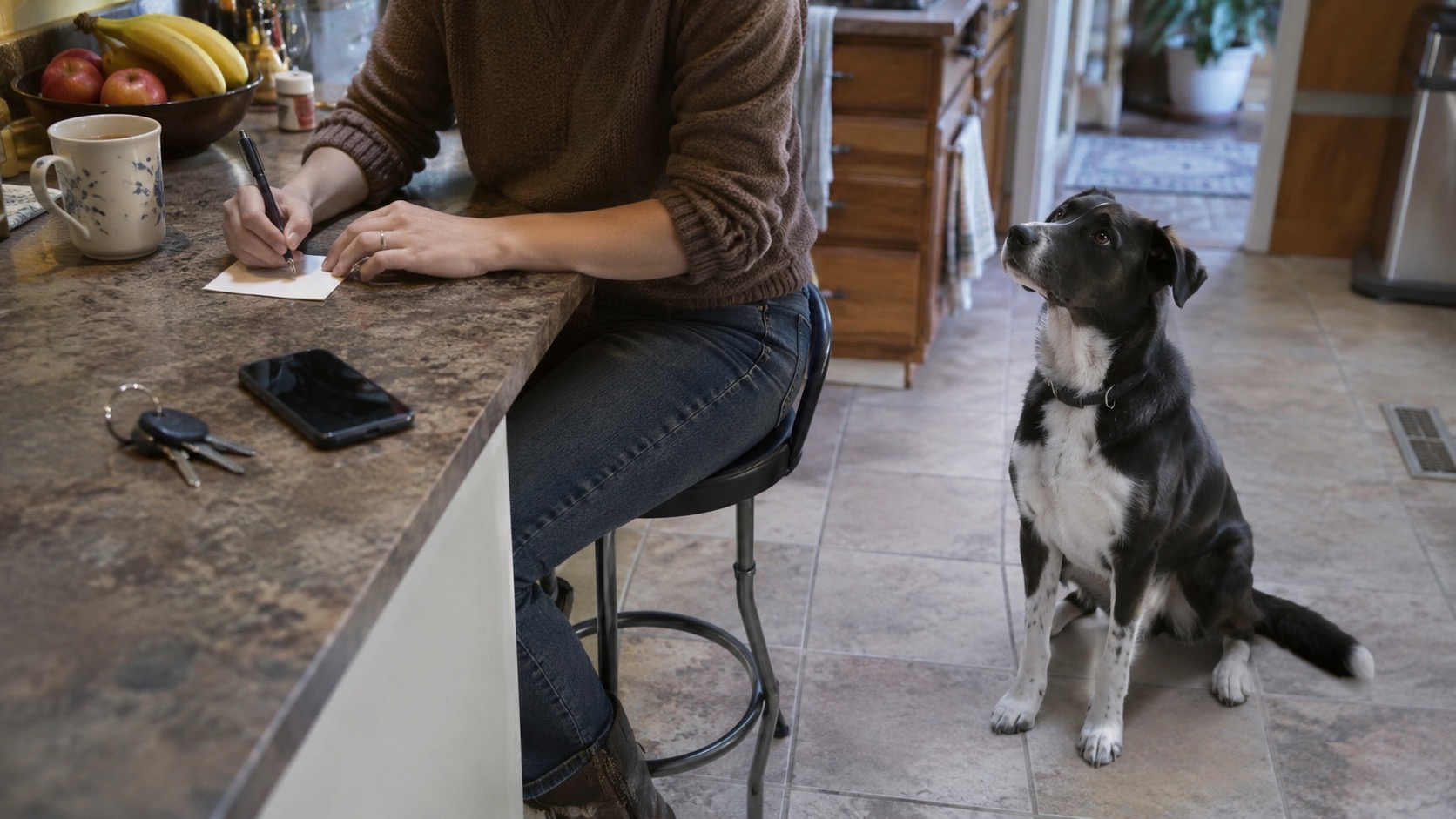
If the admission is an emergency, your plan is whatever you set up in advance. The key holder gets your dog fed and out. Then they either keep your dog or hand off to a sitter or facility you've already chosen. Write that second step's name and number on a one-page care sheet. The pre-boarding checklist is a good template, and for a dog on daily meds the medication boarding guide shows how to write the dosing down so a stranger can follow it.
The open-ended stay is where costs add up. On The Blue Sock, the published policies say care past your scheduled pickup time is extended care. It's billed in the sitter's own increments, may be charged automatically without prior approval, and can convert to an overnight or daily rate past a threshold. Sitters may also limit its length. If a pet isn't picked up within a reasonable period, the policy allows emergency contacts, local authorities, or animal welfare organizations to be contacted.
Two practical rules follow:
- Change the dates through the booking itself, not just a chat message. The Terms of Service say an in-app message doesn't, by itself, change or reschedule a booking; date changes are submitted and confirmed through the platform. When your discharge moves, submit the change as soon as you're able, and message the sitter too.
- Know the cancellation window before you book a planned stay. Each sitter picks a full-refund window of 1, 3, or 7 days. After that, cancelling by 11:59 p.m. the day before the stay refunds 50%, and a same-day cancellation gets no refund unless the sitter agrees. If your surgery date might move, a sitter with a shorter window costs you less when it does.
For stays that stretch past a week, the long-term boarding guide covers medication refills, vet authorization, and what happens if a sitter can't finish the stay.
Does Pet Insurance Cover Boarding If You're Hospitalized?
Some policies do, and this benefit is easy to miss because it covers your illness, not your dog's.
- MetLife Pet describes covering boarding of up to $500 per policy period when you or a household member is hospitalized for more than 48 hours. It's reimbursed at your policy's percentage, and claims need proof of the hospitalization plus boarding receipts. Its own example: a $225 boarding bill reimbursed at $135 after a $100 deductible and 80% reimbursement.
- Pets Plus Us lists kennel boarding fees, if you're hospitalized and can't care for your pet, among additional benefits capped at $1,000 per incident, with no deductible or co-pay on those benefits.
These are examples, not recommendations. Policies change, and many plans have no boarding benefit at all. Search your own policy for "boarding" or "kennel" before you need it, and keep every receipt and your admission paperwork. If the worry is your dog getting sick during a stay, that's a separate question, covered in what happens if your dog gets sick while boarding.
Setting Up Your Backup on The Blue Sock
You can't predict a hospital stay, but you can have someone ready for one:
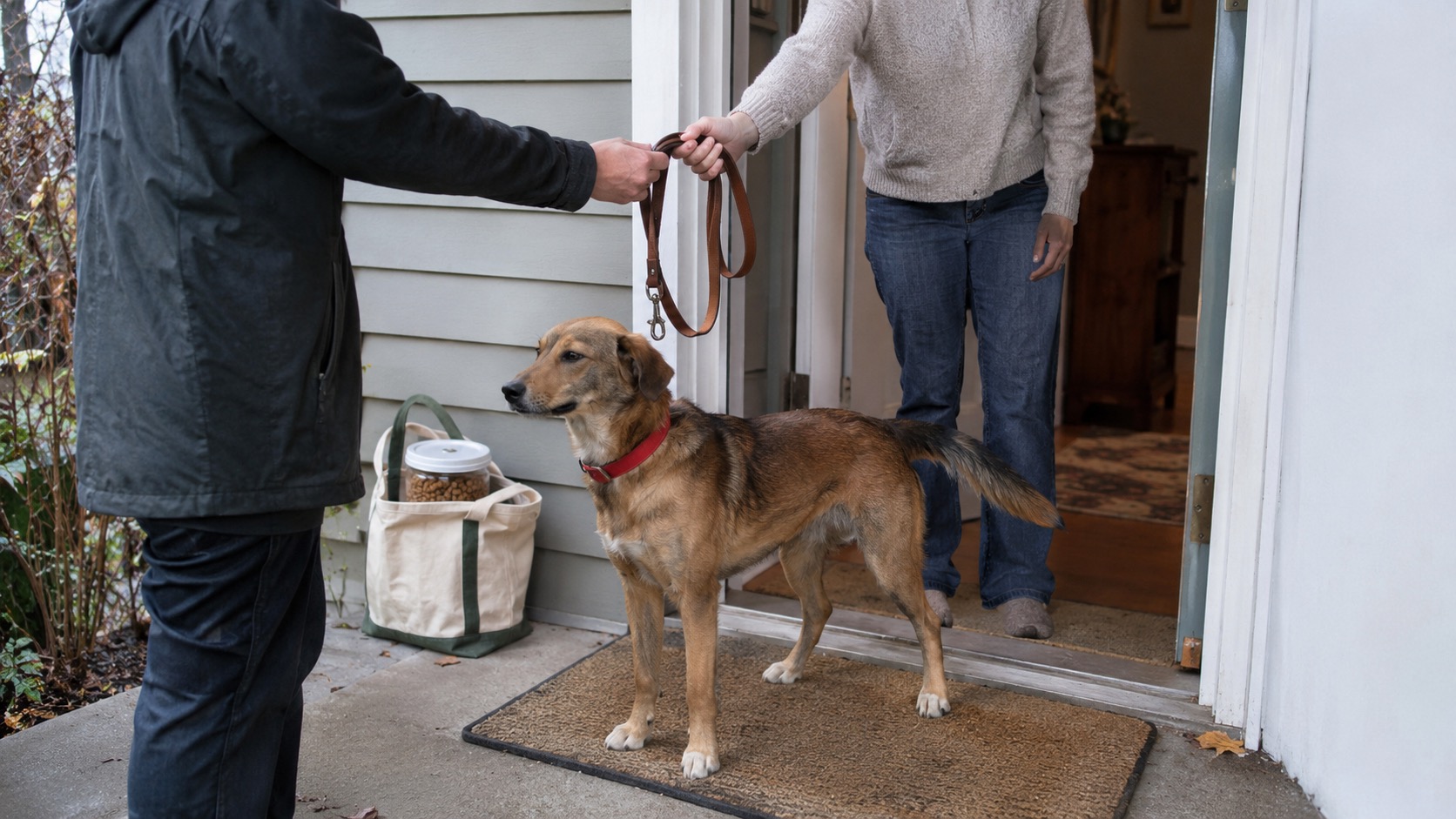
- Fill in the emergency fields on your pet profile. The profile has fields for an emergency contact name and phone number, your vet, and whether your dog is insured. The sitter sees them with your booking. Make the emergency contact the same key holder from your wallet card. That's the person who can pick your dog up if you can't.
- Compare Key Skills before an emergency. Blue Sock sitter profiles list skills such as Oral Medication Administration, Injectable Medication Administration, and Veterinary Technician / Technologist. Home Environment details show features like a Fully Fenced Backyard or a Dedicated Dog Room / Space. If your dog has real care needs, shortlist the sitters whose profiles match them.
- Do the meet & greet early. Booking is request-based, so the sitter confirms each stay. A sitter who has already met your dog can answer an urgent request with real knowledge of what they're taking on.
- Keep payment on the platform. Booking Protection covers stays booked and paid for through the platform. If a confirmed sitter cancels, the platform works to find a replacement, and if none is available the booking is refunded. Payments made outside the platform aren't covered, and that's the protection you'd most want during a hospital stay.
The Blue Sock is a curated platform: sitters apply to join, are expected to meet minimum experience requirements, and complete a professional third-party background check before joining. They differ in what they'll take on at short notice, which is what the profiles help you compare.
Frequently Asked Questions
Who can pick my dog up from the sitter if I'm still in the hospital?
Whoever you arrange. Name that person as the emergency contact on your pet profile, and confirm the handoff with the sitter in the booking's messages so there's a written record. Tell the sitter how to verify the person, such as a name and a photo ID.
What happens if I can't pick up my dog on the scheduled day?
Care past your scheduled pickup is extended care, billed at the sitter's disclosed rates and possibly charged automatically. If you know the stay needs more time, update the booking through the platform as early as you can. Then confirm the sitter has room, since availability past your end date isn't guaranteed.
Does pet insurance pay for boarding while I'm in the hospital?
Only if your policy includes it. Some do, with limits and a hospitalization-length rule, as in the MetLife Pet and Pets Plus Us examples above. Check your own policy's wording and keep your admission records.
Should I book boarding now for a surgery that's months away?
Book once the date is firm, and pick a pickup date with a buffer for a delayed discharge. Check the sitter's cancellation window first, since surgery dates often move.
Choose Your Backup Before You Need One
When you're well, finding someone to watch your dog seems easy. From a hospital bed, it's much harder. Choose the key holder, put their name in your phone, and compare sitters near you whose skills fit your dog's actual needs. Meet one now, so if the call ever comes, your dog goes to someone they already know.
You Might Also Like
 9 min
Nov 17, 2026
Emergency Dog Boarding: What to Do When You Need a Sitter on Short Notice
Need emergency dog boarding? What to pack in 15 minutes, the vaccine you can't rush, what to ask a sitter fast, and how refunds work when plans change again.
Read More → 10 min
Nov 3, 2026
Boarding a Dog After Surgery: When It's Safe, What to Ask, and How to Plan the Stay
Can you board a dog after surgery? Vet recovery timelines for spays, neuters and orthopedic repairs, what a recovering dog needs, and when to call the vet.
Read More → 9 min
Oct 16, 2026
What Happens If Your Dog Gets Sick While Boarding? Who Decides, Who Pays, and What Insurance Covers
If your dog gets sick while boarding, who takes them to the vet, who pays the bill, and does pet insurance help? The thresholds, the emergency-care rules, and the paperwork to set up before you leave.
Read More →