
What Happens If Your Dog Gets Sick While Boarding? Who Decides, Who Pays, and What Insurance Covers
By The Blue Sock9 min read
- 1.The Illnesses That Actually Come Up Around a Stay
- 2.Agree on the Thresholds Before You Leave
- 3.When Your Dog Gets Sick While Boarding: Who Decides
- 4.Who Pays the Vet Bill
- 5.Does Pet Insurance Cover a Dog Who Gets Sick While Boarding?
- 6.What to Set Up on The Blue Sock Before Drop-Off
- 7.Frequently Asked Questions
- 8.Book the Sitter You'd Trust With a Bad Day
Almost every pet parent who books a stay has the same question in the back of their mind: what happens if my dog gets sick while boarding? It rarely does, but "rarely" is not a plan. When it does happen, three things decide how it goes — whether anyone knew where the line was between "watch" and "call the vet," who was allowed to act while you were unreachable, and how the bill gets paid.
Below: the illnesses that come up around a stay, the thresholds to agree on, the emergency-care rules on The Blue Sock, and where pet insurance helps. The money parts are plain on purpose; one is unflattering, and it is the one most worth knowing.
The Illnesses That Actually Come Up Around a Stay
Most problems fall into two groups, and neither is unique to one type of boarding: anywhere dogs share air, bowls, or grass — a kennel, a daycare, a park, a sitter's home with other dogs — carries some exposure.
Respiratory: "kennel cough." It is a syndrome with several possible causes rather than a single illness, which is why a vaccinated dog can still catch it (our vaccine requirements guide explains what Bordetella does and does not cover). The Merck Veterinary Manual describes a "goose honk" cough that appears 5–10 days after exposure, usually eases in the first 5 days, and can linger for 10–20. Merck lists fever, thick nasal discharge, depression, refusing food, and a productive cough as signs of something more serious, such as pneumonia.
So a cough that starts three days after pickup may have been caught during the stay — or at the park the day before drop-off. Timing tells you where to ask questions, not who is at fault.
Stomach: vomiting, diarrhea, not eating. A sudden diet change is a common trigger, so send your dog's own food. VCA Animal Hospitals notes many cases of sudden vomiting improve within 24 hours, advises a vet if it continues past one to two days, and says to go immediately if vomiting comes with fever, lethargy, loss of appetite, abdominal pain, diarrhea, dehydration, or blood, or if the dog may have swallowed something toxic or stuck. For diarrhea, VCA's guidance is a vet if frequent loose stools persist for more than two days, sooner if it is bloody or the dog seems ill.
Agree on the Thresholds Before You Leave
The worst version is a 10 p.m. text saying "he's a little off today" while you decide, from an airport, whether that means a vet. Settle it at drop-off instead. A workable set, built from the VCA guidance above:
| What the sitter sees | What happens |
|---|---|
| One skipped meal or one vomit, otherwise bright and drinking | Message you, keep watching |
| Vomiting or diarrhea still going after a day, or a new cough | Message you the same day; you decide on a vet visit |
| Vomiting plus lethargy, blood, or refusing water; possible toxin; labored breathing | Call you and go to a vet — don't wait for a reply |
If your dog is diabetic, a puppy, very small, or on medication that has to be given with food, move every row up one level. Our guide to boarding a dog on medication covers written thresholds for insulin and seizure medication specifically.
When Your Dog Gets Sick While Boarding: Who Decides
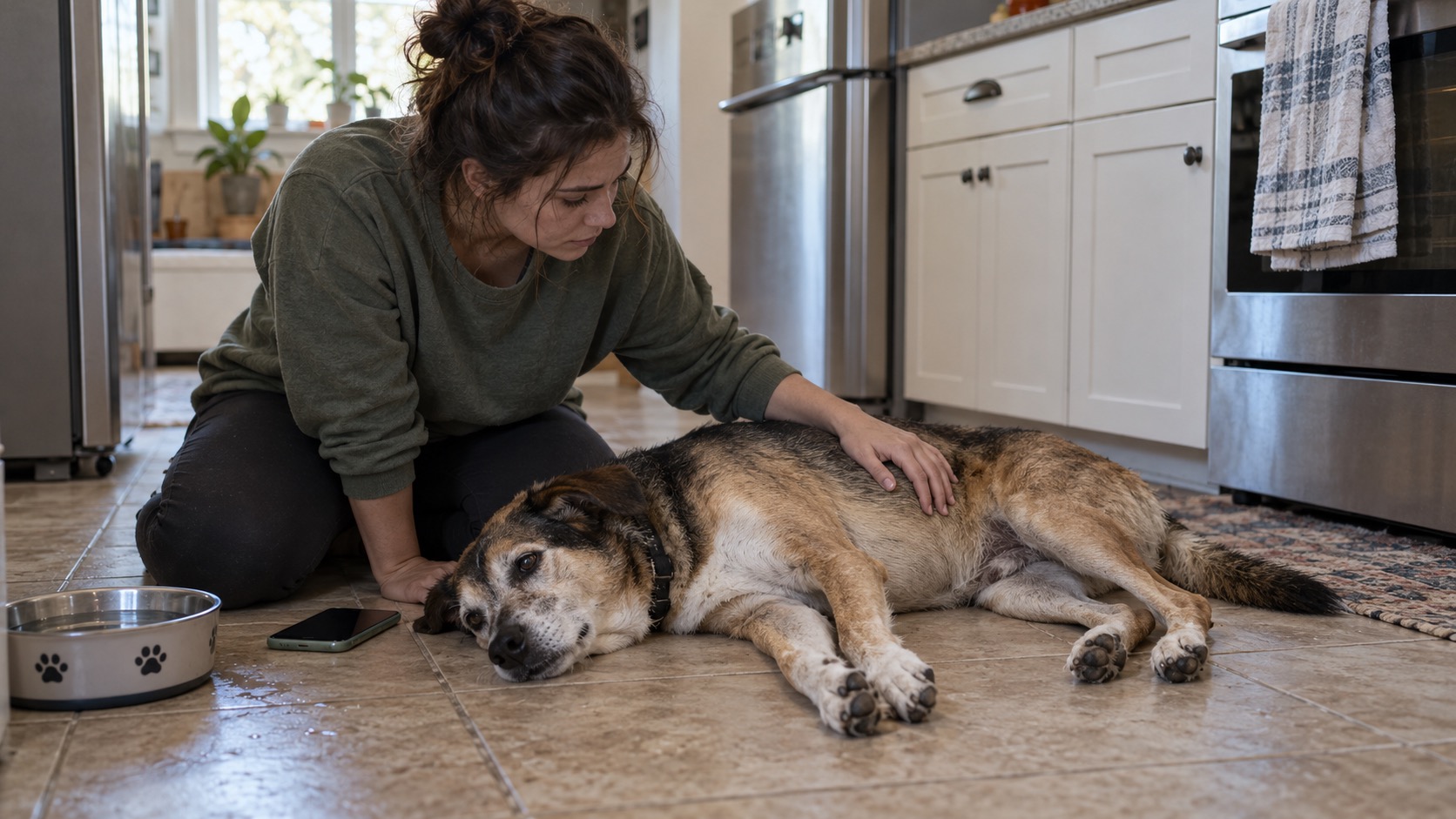
On The Blue Sock this is written down in the Terms of Service, section 12. In short: the sitter must make reasonable efforts to contact you immediately. If you can't be reached in time and, in the sitter's reasonable judgment, your dog needs immediate attention, the sitter may take your dog to the nearest available vet clinic or emergency hospital. By using the platform you authorize that. Afterward, the sitter must notify you and the platform and share the documentation they have.
Two more details matter. Sitters are not veterinarians — even one whose profile lists a veterinary background is acting as a pet-care provider, not your dog's doctor. And the Terms ask both sides to keep incident communication in in-app messages; a timestamped thread is what you, a clinic, or an insurer will want later.
For longer trips, the long-term boarding guide goes further on naming a local emergency contact with real authority.
Who Pays the Vet Bill
You do. The Terms state that the owner is solely responsible for veterinary costs, that the platform does not pay vet bills, and that sitters are not expected to pay for veterinary care personally. Booking Protection exists for a different problem — a sitter cancelling — and does not extend to medical bills.
That leaves a real gap at 2 a.m.: someone has to hand over a card, and emergency hospitals can ask for a deposit before treatment. Orange County Emergency Pet Clinics, for example, publishes a $125 exam fee and collects the low end of its treatment estimate as a deposit (our Orange County vet cost guide breaks those costs down). Before you leave:
- Call the 24-hour hospital nearest the sitter's home, not yours, and ask whether they'll take payment by phone from an owner who isn't present. OC Animal Allies keeps a directory of Orange County emergency hospitals.
- Ask your regular vet whether they keep a signed treatment authorization and a card on file for clients who travel.
- Keep your phone reachable, or name a local backup who can approve treatment and pay.
Does Pet Insurance Cover a Dog Who Gets Sick While Boarding?
Two separate questions are hiding in this one.
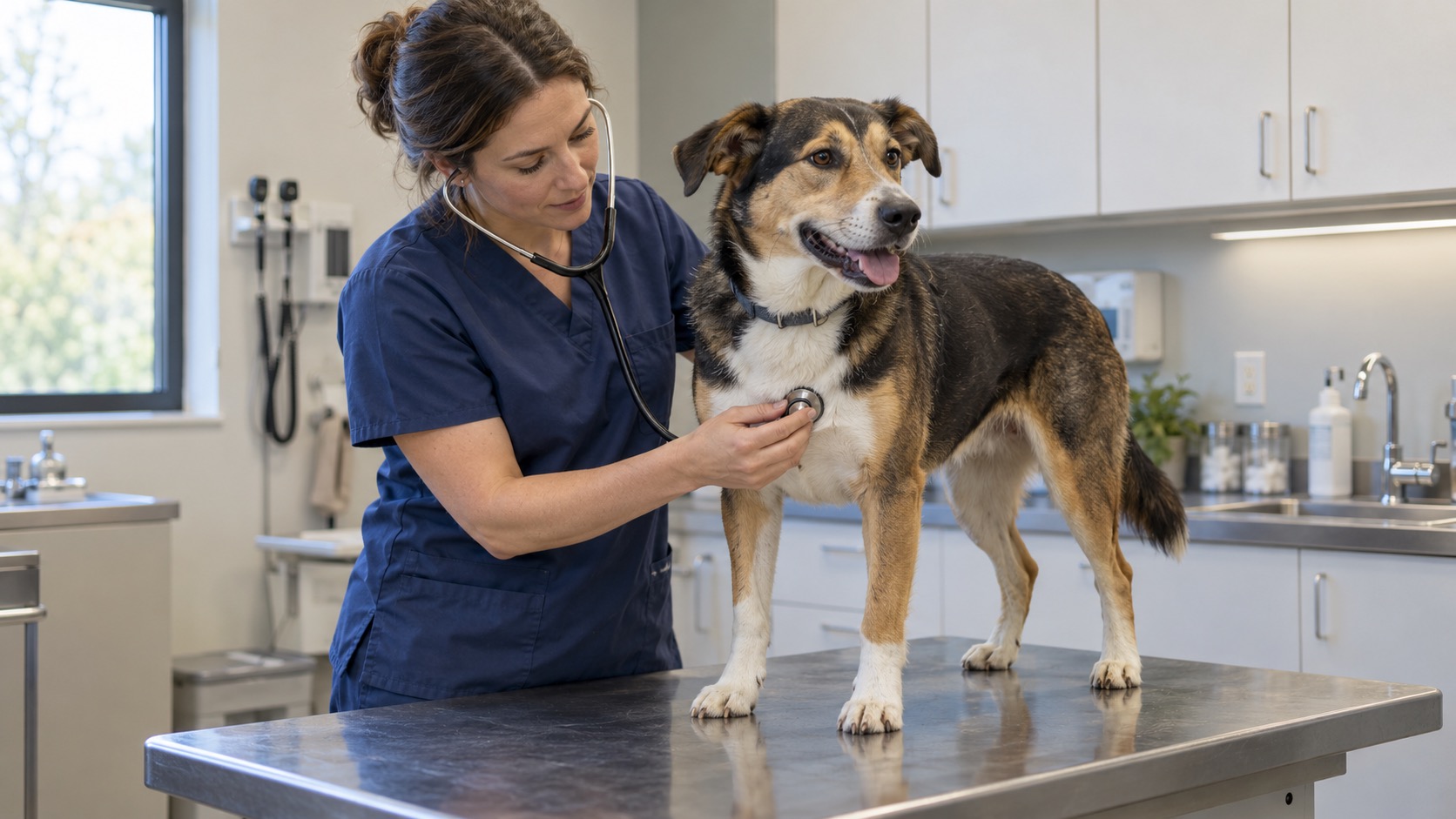
The vet bill. An illness during a stay is judged under the same terms as any other illness: waiting periods, pre-existing conditions, deductible, and reimbursement percentage. The California Department of Insurance warns that treatment during a waiting period is not covered and that your vet will expect you to pay whatever the insurer does not. So a policy bought the week before a trip may not help yet. For a claim, you will usually need the itemized invoice and medical records, so ask the sitter to request both at discharge.
The boarding itself. Pet insurance does not pay for boarding because you went on vacation. A few US policies reimburse boarding only when you are the patient. MetLife Pet describes up to $500 per policy period if you or a household member is hospitalized for more than 48 hours. Pets Plus Us lists kennel boarding fees, if you're hospitalized and can't care for your pet, among additional benefits capped at $1,000 per incident. These are examples, not endorsements; check your own policy's wording.
What to Set Up on The Blue Sock Before Drop-Off
Availability is easy to find. For a dog with any health history, what's worth comparing is how a particular sitter would handle a bad day.
- Complete the pet profile. Your vet's name and phone, whether your dog is insured, an emergency contact, and medical notes all appear on the profile the sitter sees for your booking — so they know which vet to call and to keep receipts.
- Compare Key Skills. Blue Sock sitter profiles list skills such as Veterinary background, Oral medication administration, and Injectable medication administration, so you can compare sitters on what your dog might need.
- Use the meet & greet for the hard questions. Which hospital would they drive to, how long does it take, and how would they reach you? A sitter with a specific answer is telling you something.
- Know the money rules. If your dog gets sick and you come home early, the published Refund Policy treats sitting fees as final unless another policy says otherwise, and none covers unused nights. Changes to a booking go through the booking-management feature, not a message.
The Blue Sock is a curated platform: sitters apply to join, are expected to meet minimum experience requirements, and complete a professional third-party background check before joining. Choosing the sitter whose answers match your dog's needs is still your call.
Frequently Asked Questions
Can a sitter take my dog to the vet without asking me?
Under The Blue Sock's Terms, the sitter must first try to reach you. If you can't be reached in time and your dog needs immediate attention, they may take your dog to the nearest available clinic, and using the platform authorizes that.
Who pays if my dog gets sick while boarding?
You do. The Terms make the owner responsible for veterinary costs; the platform does not pay vet bills, and sitters are not expected to pay personally. Arrange a way to pay before you leave.
My dog started coughing after boarding. Did they catch it there?
Possibly, but not necessarily. Merck puts kennel cough onset at 5–10 days after exposure, so a cough can trace back to the stay or to anywhere your dog met other dogs in the days before it. Call your vet either way, and tell the sitter in-app so they can watch any other dogs in the home.
Does pet insurance pay for boarding?
Not for ordinary travel. Some policies reimburse boarding only if you or a household member is hospitalized, with limits and documentation rules. Your dog's own illness during a stay is judged under the policy's usual terms.
Book the Sitter You'd Trust With a Bad Day
Most stays end with a tired, happy dog and nothing to report. Plan for the other kind before drop-off: write down the thresholds, fill in the vet and insurance details, and know the nearest emergency hospital. Then pick the sitter whose answers to the hard questions sound practiced. Compare sitters near you and ask the emergency question at your meet & greet.
You Might Also Like
 9 min
Nov 17, 2026
Emergency Dog Boarding: What to Do When You Need a Sitter on Short Notice
Need emergency dog boarding? What to pack in 15 minutes, the vaccine you can't rush, what to ask a sitter fast, and how refunds work when plans change again.
Read More → 9 min
Nov 10, 2026
Who Will Care for Your Dog If You're Hospitalized? A Backup Plan to Set Up Before You Need It
Planning dog care if you're hospitalized: who should hold your keys, how to tell responders a dog is home alone, which pet insurance policies pay for boarding during your hospital stay, and what happens if a pickup date slips.
Read More → 10 min
Nov 3, 2026
Boarding a Dog After Surgery: When It's Safe, What to Ask, and How to Plan the Stay
Can you board a dog after surgery? Vet recovery timelines for spays, neuters and orthopedic repairs, what a recovering dog needs, and when to call the vet.
Read More →